
Quick Overview:
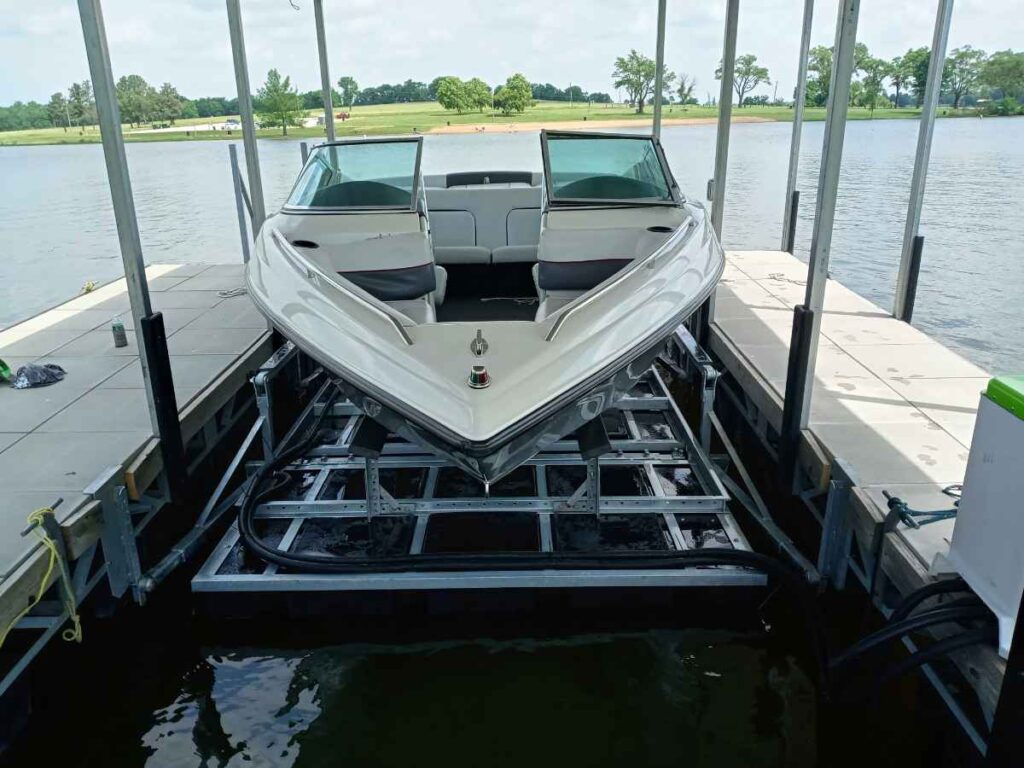
Yes, you can install a boat lift in 24-inch water at Lake of the Ozarks—but only with the right system and the right boat. Our 4,000 lb shallow-water model operates in a true overall 24″ of water in the best-case scenario with bass boats and common small pleasure boats. That is the only size we claim at 24″. Larger models need more depth because they use taller tanks. We skip the “22 inches plus draft” fuzzy math that often turns into 34–46″ of real water once you add a pontoon or tritoon. If your slip gets that shallow during low-water or drawdown conditions, a floating pneumatic lift from Camdenton is usually the practical solution.
Plenty of coves and slips on Lake of the Ozarks sit in water that most traditional lifts simply cannot use. Seasonal drawdowns make it worse. The question is not whether shallow water exists—it is whether a lift can actually work there without scraping the bottom, hanging up a prop, or forcing you into “fuzzy” numbers that fall apart when you measure the real world.
The Honest Answer on 24-Inch Water
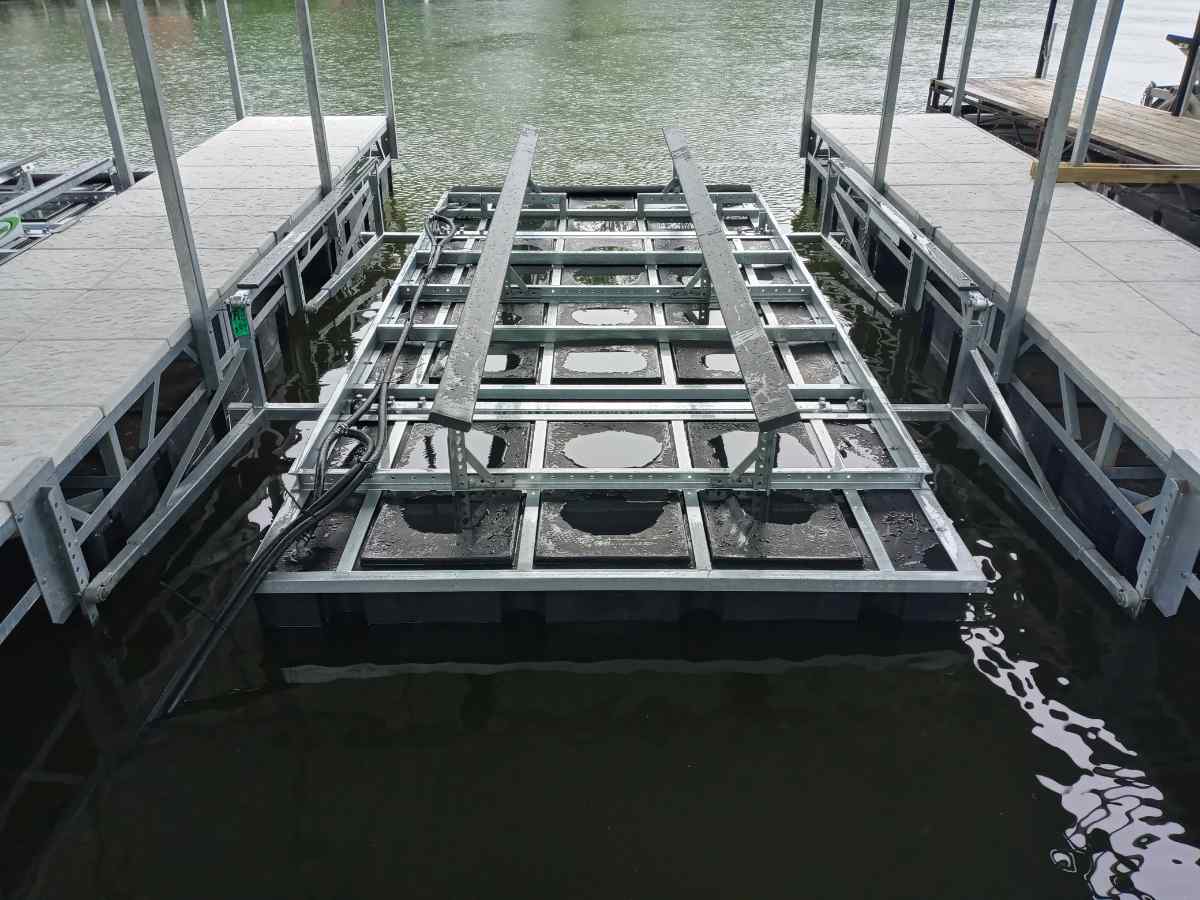
Our best shallow water boat lifts with true 24″ operating depth are built around a simple idea: tell people the real number instead of a number that only works on paper. The 4,000 lb shallow model uses the industry’s only 12″ tanks. Add the 3″ frame and you have roughly 15″ of lift structure. Pair that with a bass boat or other common small pleasure boat and the overall operating depth can be a true 24″ in the best-case scenario.
That is not a blanket promise for every boat. A pontoon or tritoon that already drafts 12–16″ (or more) changes the equation. A wake boat or V-drive changes it again. We size the lift to the boat and the slip, not the other way around. Larger shallow models (6,000 lb with 16″ tanks; 7,700 lb and 10,000 lb with 20″ tanks) need more water. Capacity still runs 4,000–10,000 lb across the line, so most boats on the lake have an option—just not always the absolute 24″ version.
Why Most “Shallow” Claims Fall Apart
Many manufacturers advertise something like “operates in 22 inches plus the draft of your boat.” It sounds low until you do the addition. A typical pontoon draft of 12–16″ plus 22″ lands you in the 34–46″ range. That is not shallow for a lot of Lake of the Ozarks slips, especially after Ameren’s winter drawdown.
We prefer the clearer version:
- 4,000 lb shallow model = true overall 24″ best-case for bass boats and small pleasure boats (12″ tank + 3″ frame + draft).
- Everything larger requires more depth because the tanks are taller.
- Your boat’s actual draft is part of the equation every time.
The floating pneumatic design helps because the whole system rises and falls with the water level. There is no fixed cradle that bottoms out when the lake drops. On-site measurement still matters—bottom conditions, slip width, and exact hull shape all play a role.
What Boats Actually Work in 24 Inches
The 4,000 lb model is usually the one that reaches true 24″ overall in the best case. It is intended for:
- Bass boats and smaller fishing boats
- Common small pleasure boats with modest draft
- Situations where every inch of water counts during low-water or drawdown periods
For wake and surf boats we offer a dedicated drop-tank V-drive option so the lower unit does not hang up when the water is shallow. Bunks on our lifts also help V-hulls glide on instead of grabbing the way wood and carpet often do. If your boat is larger or drafts more, we will tell you straight whether a 6,000 lb or bigger shallow model is the better fit—or whether the slip simply needs a different approach.
Lake of the Ozarks Realities: Drawdowns, Coves, and Measurement
Lake of the Ozarks is not a constant-level lake. Ameren’s operating license allows drops to 650 feet (645 feet in emergencies). You can see Ameren Missouri’s Lake of the Ozarks lake level reports here. (For reports on other Missouri reservoirs, check out Missouri DNR’s current lake level monitoring data.)
Shallow coves feel that change first. A floating pneumatic lift moves with the level, so if you still have enough water for the boat-and-lift combination, the system continues to work. Fixed lifts or systems that rely on precise bottom clearance often struggle when the water falls.
Practical steps before you decide:
- Measure the water at its lowest expected point, not on a high summer day.
- Note the boat’s actual draft with normal load (people, fuel, gear).
- Check slip width, dock height, and bottom type.
- Consider local aquatic-pest guidance and maintenance needs. Where zebra mussels are a concern, minimizing submerged steel may help reduce exposed surfaces, but lift design and water levels determine what’s feasible.
Our local Camdenton manufacturing and service team has installed these lifts in shallow areas on Lake of the Ozarks, Pomme de Terre, Table Rock, and beyond. We ship and install across the region, and many customers pick up at the shop.
Quick Comparison: True Operating Depth
Claim Style | Advertised Number | What It Usually Means | Transparency |
Competitor “X″ + draft” | 22″ + draft | Often 34–46″ once pontoon/tritoon draft is added | Low |
LOTO Lift 4,000 lb Shallow | True 24″ best-case | Bass boats and small pleasure boats only; 12″ tank + 3″ frame + draft | High |
LOTO Lift 6,000–10,000 lb | More water required | 16″ or 20″ tanks + frame + your boat’s draft | High |
Competitor “X″ + draft”
Advertised Number: 22″ + draft
What It Usually Means: Often 34–46″ once pontoon/tritoon draft is added
Transparency: Low
LOTO Lift 4,000 lb Shallow
Advertised Number: True 24″ best-case
What It Usually Means: Bass boats and small pleasure boats only; 12″ tank + 3″ frame + draft
Transparency: High
LOTO Lift 6,000–10,000 lb
Advertised Number: More water required
What It Usually Means: 16″ or 20″ tanks + frame + your boat’s draft
Transparency: High
How Installation Works in Shallow Water
The process starts with an honest conversation and measurement. Once we confirm the boat, slip, and water depth line up, installation follows the same reliable steps we use on every job. You can read the full boat lift installation process if you want the details. Because the lifts are floating and pneumatic, there is no need for the deep fixed structure many traditional systems require. That is one reason they succeed where other lifts cannot.
We also keep an inventory of used boat lifts for sale when a quality pre-owned unit fits the need, and we build dedicated PWC / jet ski lifts for personal watercraft that often share the same shallow slips. Picture galleries show real shallow-water installs on the lake if you want to see examples.
For more on how the floating design works in general, see how a floating boat lift works. External context on lake levels is available from Ameren Missouri’s operating information.
Frequently Asked Questions
Can you really install a boat lift in 24 inches of water?
Yes—in the best-case scenario with our 4,000 lb shallow model and a bass boat or common small pleasure boat. That is the only size we claim at a true overall 24″. Larger models use taller tanks and need more depth.
Why do you say “best-case” instead of promising 24″ for every boat?
Because draft and lift size change the number. A bigger boat that already sits deeper in the water cannot magically load onto a 24″ lift. We would rather be precise than confusing.
Will it still work when the lake drops in the winter?
If you still have enough water for your boat and lift combination, yes. The floating design moves with the level. We size for Ameren’s real operating range and drawdown conditions.
What about wake boats or V-drives in shallow water?
We offer a dedicated drop-tank V-drive option so the lower unit does not hang up. Our bunks also help V-hulls glide on cleanly.
Do you only serve Lake of the Ozarks?
We are based in Camdenton and specialize in Lake of the Ozarks conditions, but we ship and install across the region—including Table Rock Lake, Lake Pomme de Terre, Truman Lake, Grand Lake in Oklahoma, and more. Plenty of Midwest customers pick up at our shop.
Are the tanks and frame really lifetime?
Yes. Lifetime on the rotationally molded poly tanks and the hot-dipped galvanized frame. On shallow-water models we get the steel as high as possible.
Ready to See If 24 Inches Works for Your Slip?
The only way to know for sure is to look at your actual water depth, boat draft, and dock layout. Call us at (573) 873-6058 or contact us and we will walk through it with you. We will tell you straight whether the 4,000 lb 24″ setup, a larger shallow model, or something else is the right fit for your Lake of the Ozarks cove.
Read more from our blog...

Can You Upgrade a Boat Lift to Hold a Heavier Boat at Lake of the Ozarks?
Brief Overview: Yes, many LOTO Lift systems can be upgraded for a heavier boat by adding tank frames, tanks, and, when needed, another control unit.

Best Boat Lift for Rough Water: Features That Really Matter
Brief Overview: The best boat lift for rough water is a floating pneumatic lift with a wide tank footprint, enough vertical travel to clear peak
Wrap-Around Boat Lifts at Lake of the Ozarks: Amazing Walk-Around Access or Hidden Hassles?
TL;DR: Wrap-around boat lifts add a built-in walkway platform that lets you safely circle your raised boat for hull cleaning, prop checks, and easy covering
