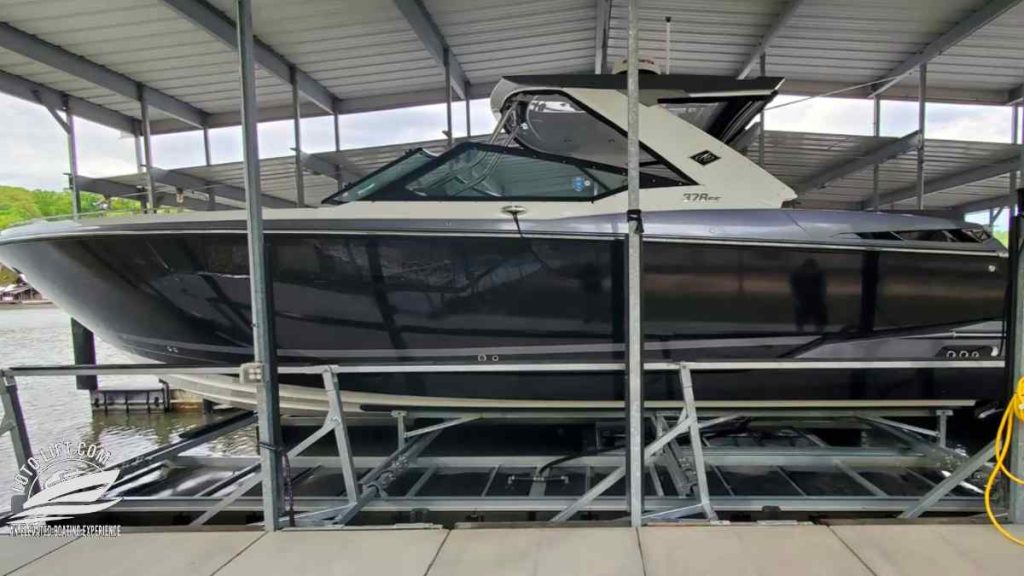
Choosing the correct boat lift size and weight rating is one of the most important decisions you’ll make when protecting your boat at Lake of the Ozarks. A lift that’s too small can lead to premature wear, instability, and expensive repairs—while the right lift provides long-term peace of mind.
This guide breaks down how to determine sizing for specific types of boat lifts and how to avoid the most common mistakes.
What Does “Boat Lift Weight Rating” Really Mean?
Boat lift capacity refers to the maximum safe weight the lift is designed to handle. This number should always be based on your fully loaded boat, including:
- Fuel
- Batteries
- Gear and equipment
- Water in livewells
- Aftermarket accessories
Relying on dry weight alone is one of the most common (and costly) errors. For more tips on choosing the right boat elevator check out this boat lifts at Lake of the Ozarks buyer’s guide.
How to Choose the Right Lift Size
When sizing a boat lift, be sure to consider these necessary factors:
1. Boat Length and Beam
Longer and wider boats require more cradle support and a properly sized lift frame.
2. Boat Type
- Pontoon and tritoon boats require high lift capacity and need evenly distributed support across multiple pontoons
- Ski and wake boats require balanced bunks and proper hull alignment
- Fishing boats and small boats typically require lower lift capacities, but proper bunk alignment and balanced support are still critical to prevent hull warping, stress cracks, and uneven weight distribution over time.
3. Type of Dock and Configuration
Covered docks and shared slips may limit lift dimensions and influence lift style.
Dock layout is not the only limitation to consider. In slips with reduced depth, some setups may also require boat lifts for shallow water conditions so the boat can be lifted safely without clearance problems or poor operation during water-level changes.
4. Cost Considerations
After gathering the above mentioned information you’ll want to do some research on different lake lift manufacturers. We also recommend checking out this boat lift cost guide at Lake of the Ozarks before contacting the lift dealers you’re interested in.
Common Boat Lift Weight Ranges
While exact needs vary, general categories include:
- Personal watercraft and small boats
- Ski and wake boats
- Pontoon and tritoon boats
- Heavier specialty or custom boats
Selecting a lift with a weight buffer above your actual load helps extend lift lifespan and improve stability.
Pontoon and tritoon boats can weigh significantly more than many boat owners expect once fuel, gear, and passengers are included. Understanding proper lift sizing is critical, which is why it’s important to review pontoon boat lift weight capacity and sizing guidelines before selecting a syste m.
Why Oversizing Is Usually Smart
Choosing a slightly higher-rated lift:
- Reduces mechanical strain
- Improves stability in rough water
- Accommodates future upgrades or boat changes
At Lake of the Ozarks, where wakes and water levels fluctuate, oversizing is often the safer long-term choice when having a boat lift installed.
Overloading a lift is one of the fastest ways to cause structural strain, motor failure, or cable damage. If you’re already seeing symptoms, review these boat lift problems and solutions to identify what may be happening with your lift.
Floating Boat Lifts and Capacity Advantages
Floating boat lifts naturally distribute weight and adjust with water levels, making them especially well-suited for Lake of the Ozarks conditions. They reduce stress on both the lift and dock compared to fixed systems.
Frequently Asked Questions
1. What does boat lift weight capacity mean?
Boat lift weight capacity is the maximum safe load the lift can support, based on your boat fully loaded with fuel, gear, batteries, water, and accessories—not just dry weight.
2. How do I choose the right boat lift weight capacity?
Add your boat’s dry weight plus fuel, gear, batteries, and accessories, then select a lift with a 20–30% safety buffer to improve stability and extend lift life.
3. Does dock type affect lift capacity?
Yes. Dock type can directly impact lift capacity and design. Covered docks, shared slips, and narrow dock openings can limit lift size, cradle width, and lifting mechanism, which may require a higher-capacity or specialized lift to safely support the boat within those constraints.
4. Are floating boat lifts good for Lake of the Ozarks?
Floating boat lifts are well-suited for Lake of the Ozarks because they adjust to changing water levels and distribute weight evenly, reducing stress on the lift and dock.
Get Help Selecting the Right Boat Lift
If you’re unsure about sizing, expert guidance can save thousands in repairs or replacements. LOTO Lift helps boat owners select the correct lift size and capacity for their specific dock and boat.
Contact us today for expert help choosing the right boat lift.
Read more from our blog...

Why Your Boat Lift Cost Can Vary More Than You Think
If you’re shopping for a boat lift at Lake of the Ozarks, price is important—but it should never be the only factor. The right lift
Buying a Boat Lift at Lake of the Ozarks? Read This First!
Buying a boat lift at Lake of the Ozarks is not the same as buying a lift for a calm inland pond. Wave action, fluctuating

Boat Lifts Explained: How They Work, Types, and Why They Matter
Boat lifts play an important role in protecting boats, extending their lifespan, and simplifying ownership. While many boat owners are familiar with docks, fewer fully
